There are many different ways of hardening a piece of metal. The most common of these is work hardening (also known as strain hardening), a process by which cold working a metal makes it stronger and harder at the expense of ductility.
For designers and engineers, this phenomenon opens up new possibilities. Alloys that don’t respond to heat treatment can still be strengthened through mechanical processing, and the fabrication procedures themselves can enhance performance.
What is Work Hardening?
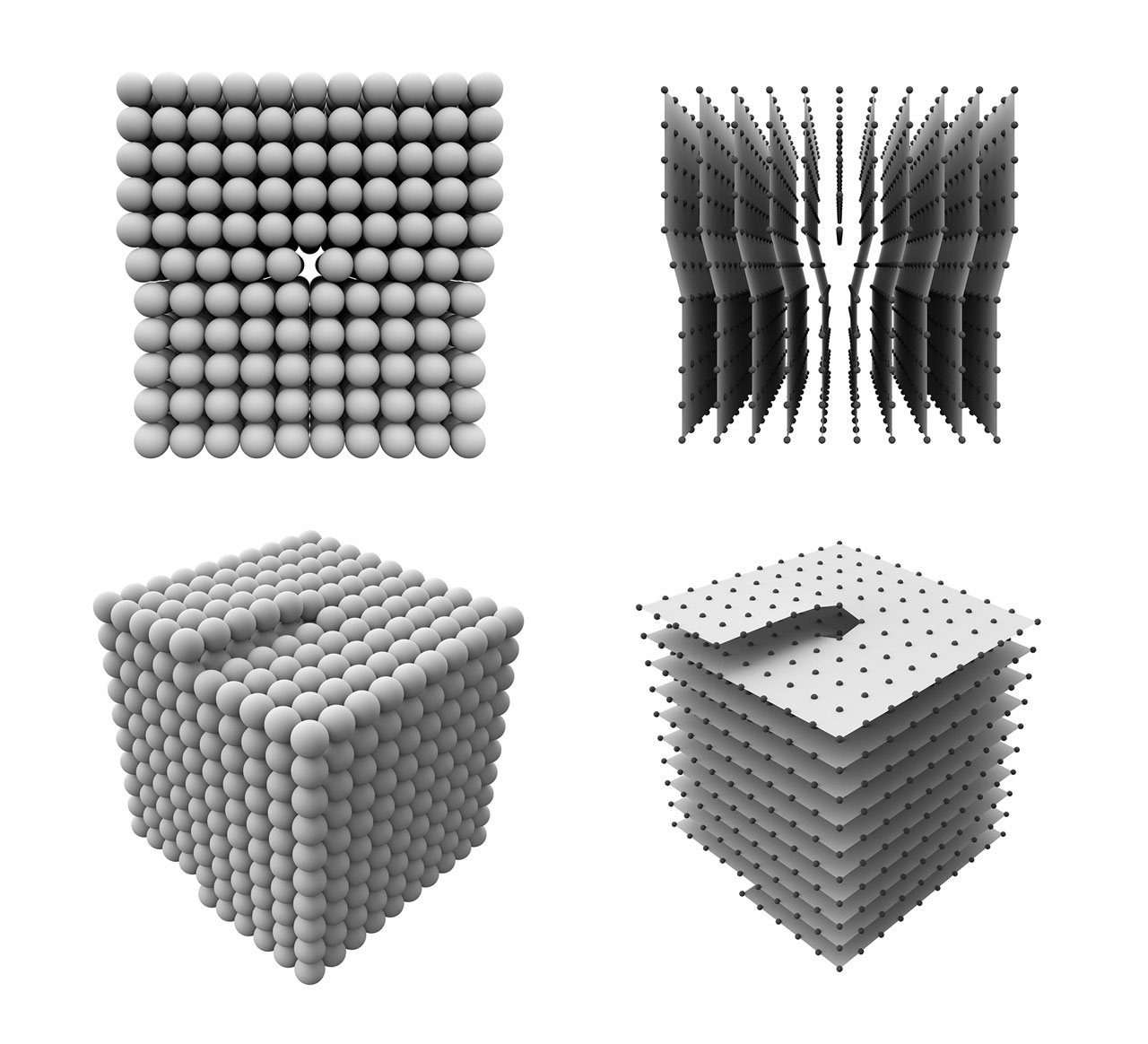
Cold working — carried out at room temperature — involves processes such as drawing or rolling. At the microscopic level, the once-regular crystal lattice of the metal develops dislocations: tiny imperfections in the structure. As more cold work is applied, the density of dislocations increases and they start interfering with each other’s movement. The motion of dislocations through the metal is hindered by the presence of other dislocations.
The result is a material that requires greater stress to deform further. In short: more effort in processing equals greater strength.
Advantages of Work Hardening
- Improved dimensional accuracy in finished components
- Finer grain structures with more grain boundaries resisting deformation
- Better surface finishes compared with hot working
- Easier handling thanks to lower processing temperatures
Relative Work Hardening Behaviour of Alloys
All copper and copper–nickel alloys in the Columbia Metals range can be cold worked to some degree. However, their rate of work hardening varies considerably.

Copper
With outstanding ductility, pure copper (e.g. C101, C109, C110) is exceptionally well suited to cold working. It work hardens rapidly yet retains good workability across a wide range of deformation, making it highly versatile in fabrication.
Brass
- Low Zinc Brasses (e.g. CZ101, CZ106, CZ126) form a single-phase microstructure with excellent ductility, making them ideal for cold working.
- High Zinc Brasses (e.g. CZ109, CZ114, CZ115, CZ121) contain a harder, more brittle beta phase, which reduces cold workability but increases strength and machinability. Additions such as lead in CZ121 improve machinability but reduce cold workability. Careful annealing is important to minimise the risk of stress corrosion cracking.
Bronze
The addition of tin to bronze alloys increases strength but reduces ductility, limiting cold working potential. Aluminium bronzes (e.g. CA103, C63000, Def Stan 02-834, Coldur-A) show further reductions in cold workability, particularly when aluminium content exceeds 10% (as in CA104 and Def Stan 02-833).
Copper-Nickel
Alloys such as CN102 and CN107 gain strength from nickel without a severe loss of ductility, allowing moderate cold working. Their steady work hardening rate permits significant forming before annealing is required.
Beryllium Copper
Cold working behaviour depends strongly on the heat treatment condition. In the aged condition, high strength makes cold working difficult, so forming should be carried out in the annealed condition prior to ageing. When treated correctly, beryllium coppers (e.g. Becol-25, C17200) exhibit the highest work hardening rates of all copper alloys.
Phosphor Bronze
Tin and phosphorus additions increase strength at the expense of ductility, reducing cold workability. While phosphor bronzes (e.g. PB102, PB103, PB104) can be cold worked, their higher work hardening rate means careful control is needed to avoid brittleness or cracking.
A Cautionary Note
As with many metallurgical processes, there’s no such thing as free lunch. Work hardening can improve strength and yield properties, but at the expense of ductility. Designers must be aware that brittleness, cracking, or even component failure may result from an excessive increase in tensile and yield strength. Higher forming forces are required than with hot working, and stress-relieving or annealing heat treatments may be necessary to remove the stresses created by cold working.