The trials and tribulations of the mariner are many and varied. History and mythology alike have created a long list of hazards: attacks by whales, apocalyptic weather, mystical triangles near Bermuda, icebergs and the dangers of misnavigation. Yet for well over a thousand years, arguably the greatest threat to marine commerce wasn’t colossal or dramatic at all. Instead, it came from a two inch-long organism that had a predilection for eating ships from the inside out.
This terror of the deep is the shipworm. Also known as the pillbug and the gribble, the creature’s taxonomic name is Teredo navalis (the Teredo worm), a marine bivalve mollusc with a penchant for a diet of wood and an inherently destructive digestive practice.
History of the Shipworm
The shipworm is not a new threat. Fossil records from the Cretaceous period (145-66 million years ago) show evidence of its activity. Archeological excavation of boat plank hulls in Egypt has shown the presence of shipworm damage from the second millennium BC. The impact is still present in the modern day. Wherever wood is used in marine construction there are shipworms ready and eager for their next meal.
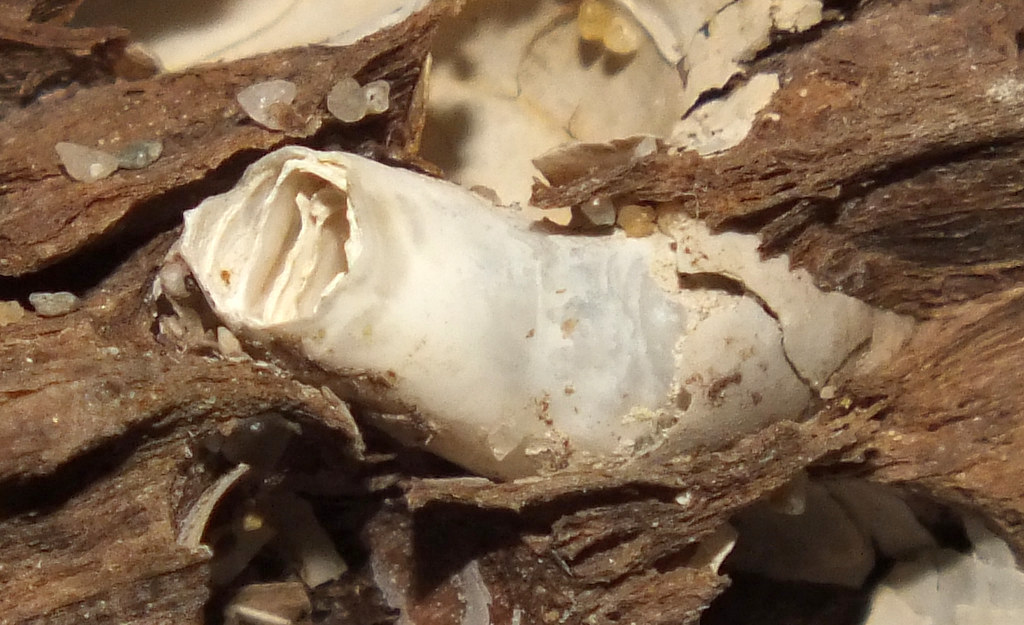
The biology of the Teredo worm is uniquely set up to let them thrive in submerged wooden environments. Small, clam-like shells at the front of the worm are used to grind into wood, creating long tunnels. The gills of the Teredo worm are the home to symbiotic bacteria that can break down cellulose. The worm can then extend out siphons from the wood to draw in and expel water, allowing the worm to breathe and feed.
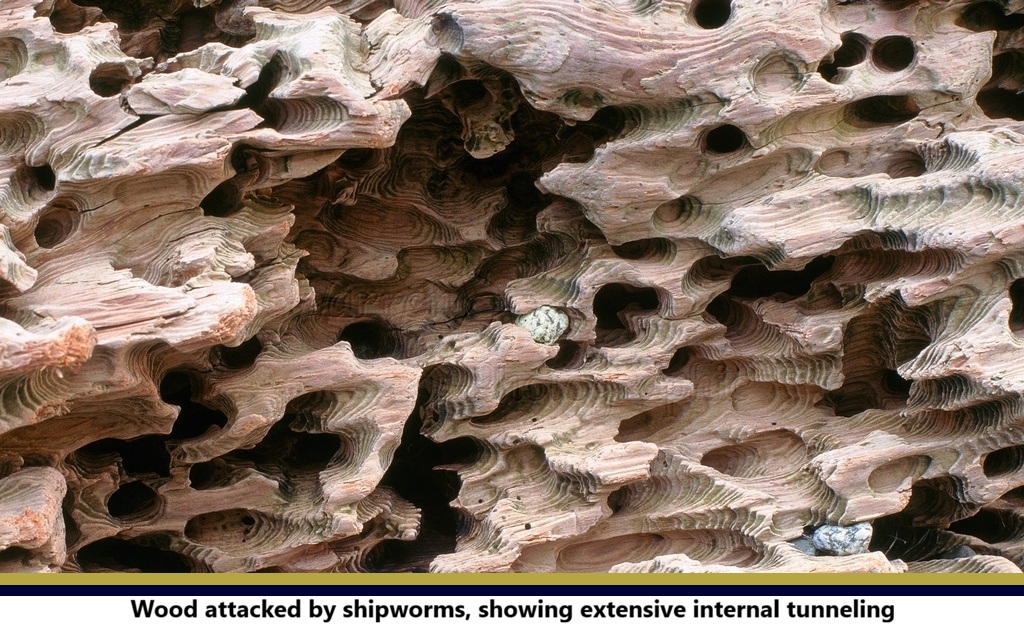
This method of advancing into a structure was observed by engineer Marc Brunel, who was inspired by shipworm tunnelling when he developed the tunneling shield used in the construction of the Rotherhithe Tunnel under the River Thames. This technique can still be seen in the design of tunnels today.
The golden age of wooden ships up until the mid-nineteenth century provided a multitude of dining options for the Teredo worm. In Columbus’ fourth voyage reference was made to the “worm-eaten” hulls of the Capitana and Santiago that forced their abandonment.
Copper to the Rescue
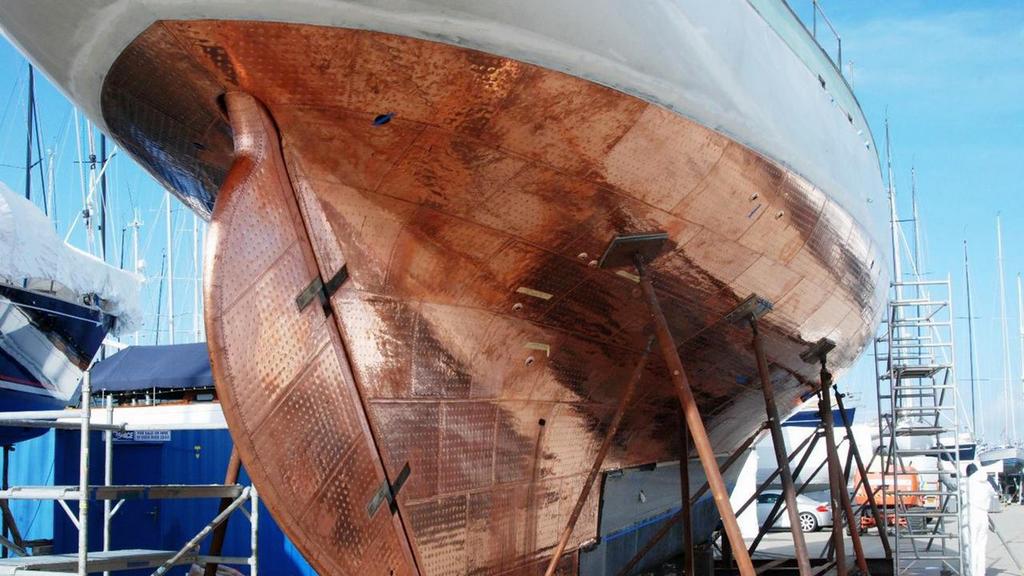
A defence was needed against this voracious beast and a simple solution was to prevent access to the wood in the first place. This can be achieved by cladding or sheathing the timber, a method suitable for both marine craft and marine structures. Even the shipworm struggles with a metallic starter before their more customary wooden dinner. Non-ferrous metal alloys are ideally suited for this purpose, and the use of copper was trialled in the British Navy in the mid-eighteenth century before its full adoption.
This form of protection is still in use and the alloys stocked by Columbia Metals are employed in exactly these applications. Copper is particularly suitable for sheathing boat hulls. As well as preventing the shipworm from enjoying a hearty meal, it also offers excellent resistance to biofouling and marine corrosion. Copper is lighter than alternative choices which can provide an economic benefit.
A grade such as C106 is a strong candidate for hull sheathing where these properties are required. When it comes to fixed marine structures, consideration should also be given to splash zone corrosion (the area just above the tide line) and here the 90/10 copper nickel (a grade such as CN102 or CW352H) excels, combining resistance to seawater with long-term durability in challenging conditions.
Despite the decline of wooden ships, the shipworm is far from just a historical curiosity. Timber remains widely used in marine infrastructure and in the early 2000s the global damage attributed to the shipworm was estimated at US$1 billion per year.
But while shipworms remain hungry, copper alloys are ready and willing to spoil their appetite.